CNPP réalise une campagne d'essais sur les incendies de batterie
France Assureurs et Assurance Prévention ont confié en 2024 à CNPP la réalisation d’essais d’envergure sur les incendies de batteries lithium-ion.



Contexte de la campagne d'essais
Les incendies liés aux batteries lithium-ion, utilisées dans les voitures, les trottinettes ou les vélos électriques, les téléphones mobiles ou encore les ordinateurs, représentent un risque émergent. En effet, le développement très rapide de cette technologie génère des problématiques variées en termes de prévention du risque que ce soit pour les entrepôts de stockage, les bornes de recharge automobile, les parkings automobiles mais aussi les conditions de recharge des mobilités douces (vélos et trottinettes électriques).
C’est pour cette raison que France Assureurs et Assurance Prévention ont confié en 2024 à CNPP la réalisation d’une campagne d’essais qui s’inscrit dans le cadre de l’étude initiée en 2022 par le CNPP sur le stockage des batteries. Un groupe de travail spécifique piloté par les assureurs, le GPPE (Groupe Permanent Prévention Entreprises), a été chargé de définir les modalités et la configuration des essais.

L’incendie survenu en février 2024 à Viviez (Aveyron) dans un entrepôt de batteries, ou encore l’explosion d’une batterie de trottinette en charge chez un particulier à Dunkerque il y a quelques mois, ont démontré que le stockage et l’utilisation des batteries lithium-ion pouvaient présenter un risque d’incendie important. C’est pour cette raison que France Assureurs a décidé de confier au CNPP, des essais d’envergure sur les incendies de batterie. Cette campagne permettra de progresser dans la connaissance de ce risque afin de mieux le prévenir et d’en réduire les conséquences humaines et matérielles.
Les objectifs de la campagne d'essais
- Faire avancer la prévention et la protection des biens et des citoyens utilisant des batteries.
- Récolter des données sur la façon dont l’incendie se déclenche et se propage.
- Tester l’efficacité du système sprinkler, un réseau d’extinction automatique à eau, pour éviter la propagation d’un incendie dans le cas d’un stockage de batteries de vélo au sein d’un entrepôt.
- In fine, il s’agit donc de réduire les conséquences d’un sinistre en maîtrisant le risque.

Nous avons initié cette campagne d’essais dans le but de faire progresser notre connaissance de ce risque nouveau que représentent les batteries électriques. Nous pourrons ensuite adapter notre discours de prévention à cette nouvelle réalité et en particulier au développement des mobilités douces, notamment des trottinettes et vélos électriques. Notre association Assurance Prévention joue ainsi pleinement son rôle, au nom des assureurs, de sensibilisation du grand public aux risques du quotidien.
La configuration de l'essai du 12 novembre 2024
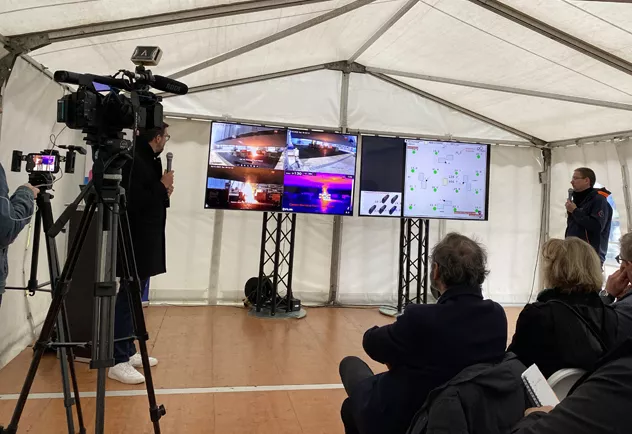
La configuration de cet essai est typique d’une situation courante de stockage de batteries lithium-ion près d’une zone de production. Notre hall d’essai, unique en Europe, d’une superficie de 900 m² et équipé d’un plafond réglable, contenait une palette de 40 batteries lithium-ion conditionnées en carton sous un plafond réglé à 3 mètres. La mise à feu a été provoquée par une plaque chauffante électrique préalablement installée à l’intérieur. Un ensemble de caméras et de capteurs permet de suivre l’évolution de l’incendie en mesurant en temps réel des paramètres tels que la température, le flux thermique, le débit et la pression d’eau.
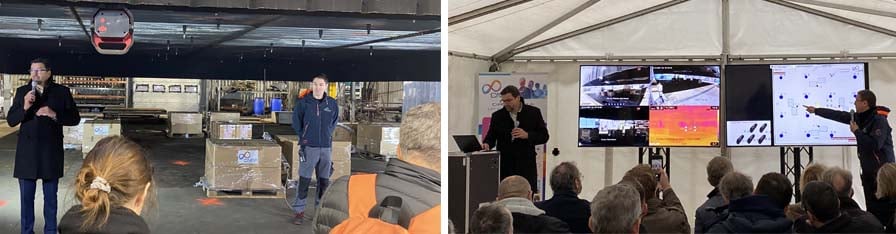

Les innovations, en particulier dans le domaine de la mobilité, génèrent de nouveaux risques qu'il est nécessaire de bien connaître pour les contenir. C'est la raison d'être de CNPP que de créer pour tous un environnement de confiance en développant une expertise sur les sujets émergents. Nous remercions France Assureurs et Assurance Prévention de nous faire une nouvelle fois confiance pour de tels essais. Notre site à Vernon répond parfaitement aux exigences de cette recherche.