
Are you a manufacturer of safes?
Do you want to demonstrate the quality of your safes?
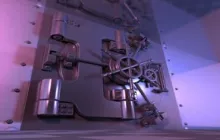
The A2P certification is the reference certification ensuring the effectiveness of protection against burglary. It provides enhanced security for safes. The tests carried out in our laboratories are continuously adapted to the new techniques and tools used by burglars.
What products are covered?
The certification A2P leads to a classification of safes according to their resistance to burglar attempts.
These are different categories of safes designed for both private individuals and operators of sensitive establishments in the banking, industrial, and commercial sectors.
Safes, strong doors, strong rooms, deposit safes, safe bases (pedestals)
The certified characteristics:
- certified safes are designed to resist burglary attempts, unauthorized opening, tampering, cyberattacks, and originate from manufacturing process with controlled quality.
- the standard exclusively concerns:
- the certification regarding burglary resistance for safes, ATM safes, deposit safes, domestic safes, strong doors, vaults, safe bases, safe locks, strong security enclosure walls;
- or vis-à-vis the effectiveness of the neutralization mode and the triggering mode for the banknote neutralization systems;
- or vis-à-vis their resistance to attacks by a ram vehicle for the door sets, curtain and over-locking of strong security enclosure equipments .
High-security locks
Certified characteristics vary depending on product type: they may include resistance to destructive attacks, resistance to sophisticated opening attempts (logical attacks or fine manipulation), number of combination possibilities, electromagnetic compatibility, reliability, compliance with relevant standards EN1300 (e.g. for High Security Locks HSL).
ATM safes, safe bases (pedestals)
Certified features cover:
- the ability to resist unauthorized opening attempts, for a given time, to reasoned attacks from one or more operators using (their) physical strength and defined tools (hand, electrical and thermal tools depending on the case),
- the ability of the lock intended to equip these products to resist destructive attacks and fine or logical opening attempts,
- the applicable provisions of EN 1143-1 standards (safes, ATMs, strong doors and strong rooms).
Safety cabinets and furnitures
Certified features cover:
- the ability to resist unauthorized opening attempts, for a given time, to reasoned attacks from one or more operators using (their) physical strength and defined tools (hand, electrical and thermal tools depending on the case),
- the ability of the lock to resist destructive attacks and fine or logical opening attempts,
- the applicable provisions of the EN 14450 standards.
Banknote neutralization systems integrated into safes and bank machines
Certified features cover:
- the ability to automatically neutralize all banknotes irreversibly, in a given time,
- the ability to trigger the defined attack(s).
Technical Security Enclosure Equipment
Products covered and certified features:
technical security enclosure walls for their resistance to burglary (A2P CR3 PETS to A2P CR6 PETS),
door, curtain and “over-locking” blocks for their resistance to ram vehicle attacks.
Options of the EN 1143-1 Standard for Safes: T2, EX, GAS et CD
Option T2 – Enhanced Resistance to Portable Power Tools
Within this framework, the T2 option of the EN 1143-1 standard introduces an additional level of requirement for products submitted for A2P certification. This option is based on the use of an enhanced list of tools, including next-generation portable power tools that are more powerful and aggressive than those used in the standard tests.
Products claiming the T2 option must demonstrate increased resistance against a wider range of attack scenarios, replicating break-in conditions similar to techniques currently observed in the field.
The evaluation notably focuses on the safe or security element's ability to maintain its structural integrity under the action of these advanced tools, taking into account critical areas such as the door, walls, or locking systems.
Thus, the T2 option identifies products offering a higher level of protection, particularly suitable for environments exposed to high burglary risks.
Option EX – Resistance to Solid Explosives
The EX option of the EN 1143-1 standard concerns the resistance of safes, vault doors, and strong rooms to attacks using solid explosives. It assesses:
- the product’s capacity to absorb or deflect the shock wave,
- the mechanical resistance of the walls and door after the explosion,
- the ability of the locking system to remain secured.
This option is particularly adapted to sensitive environments such as bank branches or locations with a high exposure to criminal activity.
Option GAS – Resistance to Explosive Gas Attacks
The GAS option evaluates the product’s resistance to attacks involving explosive gas mixtures, a technique increasingly observed on automated teller machines.
The tests focus on:
- resistance to the overpressure generated by the gas explosion,
- durability of the walls and door,
- the safe’s ability to remain closed and secured after the attack.
Option CD – Resistance to Core Drilling Attacks
The CD option of the EN 1143-1 standard corresponds to an additional resistance test for core drilling applied to safes and strong rooms certified under this European standard.
It evaluates a product’s ability to withstand an opening attempt using core drilling, employing specialized tools such as diamond cores and heavy drilling devices.
To learn more about:
the benefits of the A2P mark
the criteria for awarding certification (eligibility of requests, marking, labelling, etc.)
application procedures
Enhance the value of your products on international markets with EFSG
Reduce costs and facilitate the placing of your security products on international markets, while constantly ensuring control of technical requirements and a high level of trust between stakeholders.

Whatever your question, we are here to help. Contact us!