
Are you a manufacturer of heat detection systems by thermal camera?
Definition and Objective
The purpose of a heat detection system by thermal camera is to trigger an alarm condition. This fire alarm condition must be managed either autonomously or via an integrated firesafety system.
System Composition
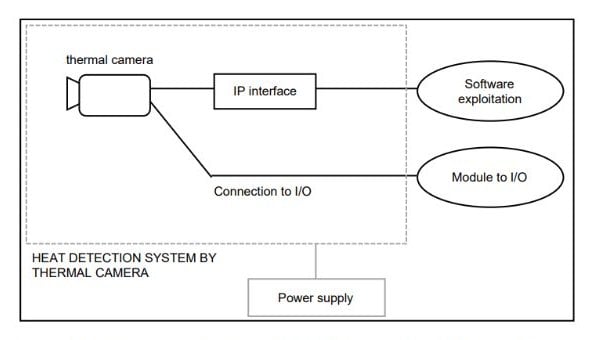
A heat detection system by thermal camera comprises:
- A sensor (thermal camera)
- An image analysis function
- Connectivity (interfaces, cables, etc.) for power supply, alarm condition generation, and transmission
It is also associated with: - A software interface for configuring the function and visualizing the thermal image
- A device ensuring the system’s autonomy
Do you want to demonstrate the quality of you products ?
Through tests carried out in our laboratories, we demonstrate the quality of your products in a transparent and impartial manner. We continuously update testing methods to accommodate new technologies. Our expert engineers have drafted a technical specification defining requirements, performance criteria, and test methods for heat detection systems thermal camera.
Thermal cameras are typically fixed; however, some applications may require mobile cameras. Note: this specification does not cover camera movement mechanisms.
Conformity Requirements
To comply with the technical specification, a heat detection system by thermal camera must meet the following requirements:
- System design for reliability
- Heat detection performance
- Resistance to environmental conditions
- Protection of image sensor enclosures
- Marking and documentation requirements
- Optional: robustness against cyberattacks
Call on a CNPP Certified expert
Why choose CNPP Certified?
CNPP Certified is the benchmark certification that ensures your heat detection system by thermal camera’s effectiveness in the market. It is based on this technical specification drafted by our experienced laboratory engineers, who contribute to the development of French and European standards and associated testing.
Reference Documents
The technical specification draws from various standards, especially:
- EN 54-4 “Fire detection and alarm systems – Part 4: Power supply equipment”
- NF EN 60068-2-1 “Environmental testing – Cold”
- NF EN 60068-2-2 “Environmental testing – Dry heat”
- NF EN 60068-2-78 “Environmental testing – Damp heat, steady state”
- NF EN 61000-4-2 / -4-3 / -4-6 “Electromagnetic compatibility (EMC) techniques – immunity tests”
- NF EN 60529 “Degrees of protection provided by enclosures (IP code)”
- CNPP ST LPMES DEC 17 04 “Connected objects – Requirements and test methods”
What is CNPP Certified?
CNPP Certified formally validates the performance and reliability of your thermal‑camera heat detection systems, both in France and internationally. It ensures recognized quality among security professionals.
How to obtain certification?
Certification is granted following comprehensive laboratory testing, accompanied by a detailed evaluation report confirming conformity with the technical specification. Periodic checks maintain certification integrity: at minimum, a documentary review is performed to verify no modifications impact system performance. Additionally, factory audits may be conducted if product labeling is desired.
Benefits of certification
- Increased trust: Assures clients that your system has been rigorously tested and meets defined standards.
- Quality assurance: Guarantees a reliable and high-performing system, reducing long-term maintenance and replacement costs.
- Market differentiation: Helps your product stand out, increasing market share.

Whatever your question, we are here to help. Contact us!